Our Location
304 North Cardinal St.
Dorchester Center, MA 02124
A model I was photographing during an inspiration shoot told me she loved my work. She was quick to add: especially work from back then, from that period. It echoed something I’d been carrying for a while already. Whenever someone asked for my Instagram, I felt embarrassed to show it, because I didn’t recognize myself anymore in the style I was putting out.
At some point in this industry, several of the biggest names in wedding photography changed their editing style, more or less at the same time. Something more contrasted, with a moodier, more fashion-driven feel. It showed up almost overnight on the accounts everyone followed.
And a certain bias sets in fast in moments like that. If the biggest names in the business are all moving the same direction, there must be a reason. It never stays a simple observation. It turns into anxiety, the fear of missing something important by staying put. I started thinking that if I didn’t change too, I might start losing weddings. That fear, specifically, is what made me change.
Before that shift, I had a look I’d describe as organic, luminous, pastel, poetic, airy. A soothing kind of editing, always in the same tones, blues, pinks, whites. Clean, minimal.
It showed especially on my Instagram, which I genuinely treated as a portfolio. The same tones from one photo to the next created something recognizable at a glance, pretty far from what most of the industry was doing at the time. That’s the look I set aside over the last two years of my career, moving toward something more fashion, more contrasted, more colorful, more saturated.
I want to be honest about something, because it’s not the story people expect. This change wasn’t dramatic for my business. I kept signing clients without any trouble during those two years. Feedback on my galleries stayed good. If I had to measure the impact of this shift purely by my clients, I’d say there wasn’t one.
What I lost sits elsewhere. By following that trend, I blended into something that didn’t look like me. I had a very singular, distinctive world, and I let it slip away without really noticing at the time.
It wasn’t really on the client side that it played out, but among my peers, the other photographers in this industry. That’s where I had real recognition, tied to a look that was identifiable among a thousand others. And peers, in this business, matter more than people think over time: they’re a big part of what builds a photographer’s reputation with wedding planners. I can’t say I saw a concrete consequence on that front during those two years. But looking back, I wonder if, over a longer stretch, it would have eventually had one.
That comment didn’t tell me anything I didn’t already know, deep down. I’d been embarrassed to show my Instagram whenever someone asked for a while already, because I didn’t see myself in it anymore. That model just put words to something I already felt without fully admitting it. That look showed. It came through, enough that people still mentioned it to me long after I’d already moved on.
I told myself, in that moment, that I probably shouldn’t have followed that shift. That I should have stayed who I was, instead of watching what everyone else was doing.
In my experience, not out of fear, at least. Fear of losing weddings is what made me change, not any real creative pull. And it didn’t bring me anything more with my clients. It only cost me my differentiation.
In my case, no visible impact. I kept signing clients and feedback stayed good through the two years I edited differently. If there’s an impact, it plays out elsewhere: in recognition among peers, and maybe, over the long run, in reputation with wedding planners.
In my case, someone had to tell me. A comment, one day, about my earlier work, made me realize that look really showed, and that I’d let it slip without noticing.
I never got the chance to go back to my earlier style. I kept that more fashion-forward editing until I closed my business, a year ago. If I had to do it again, I wouldn’t change just because the biggest names in the industry did. Looking back, I believe differentiation matters more than I thought it did at the time, and it’s the first thing worth protecting.
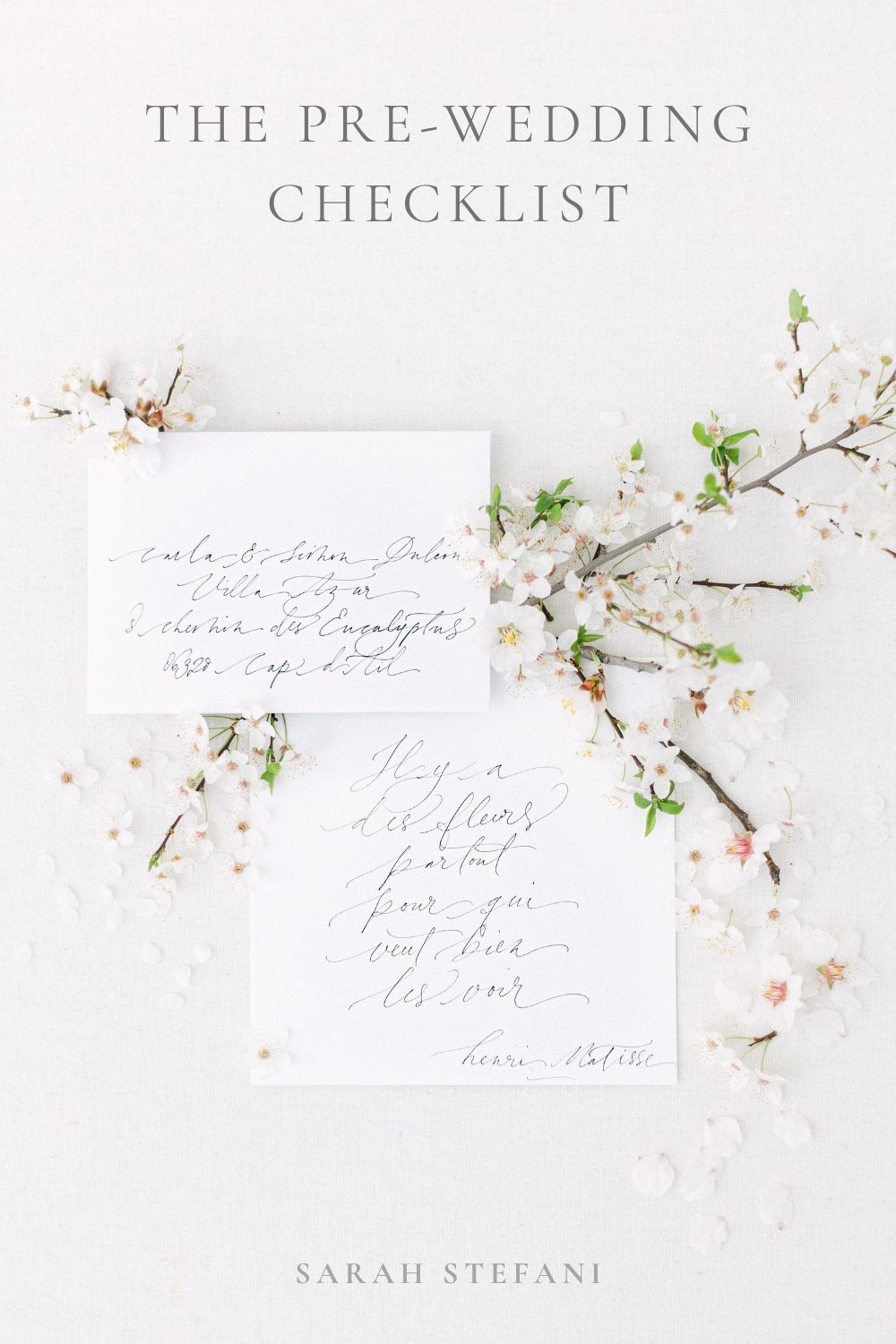
If you want to go further in structuring your client and planner communications, download The Pre-Wedding Checklist for free.
It is an 11-page PDF guide containing every logistical detail to confirm with your couples months before the wedding day, in chronological order: what to ask, when to ask it, and how to handle responses so you are never caught off guard on the wedding morning.