Our Location
304 North Cardinal St.
Dorchester Center, MA 02124
More than once, people told me my website was polished, and that it reassured them about how seriously I took my work. I also heard, often, that I had a world of my own: that you could feel it the moment you landed on the site. I never asked for that feedback. It came up on its own, in the very first exchanges, before anyone had seen a single printed photo, a single album, anything beyond what was online.
A luxury client didn’t know me. She didn’t know anyone who knew me. The only thing she had to judge whether I deserved her trust was what she saw on the screen. A polished website said something before she had read a single line: that I was serious, and that I did not work in approximations.
Having a recognisable world played the same role, maybe more. Airy, uncluttered, a lot of white space, soft light. For someone about to trust the only visual record of an irreplaceable day to a stranger, feeling a coherent identity at first glance reassures as much as a book full of beautiful photos.
I chose the weddings I was proudest of, both for the quality of the photos and for the quality of the day itself. But a beautiful wedding wasn’t always enough. It also had to match the market I wanted to sign.
There were weddings I considered a genuinely strong shoot, with photos I loved, that I still left out because they didn’t belong to that market. The portfolio didn’t tell the story of everything I had done. It showed what I wanted to be asked to do again.
For me, a shoot worth publishing meant at least a hundred photos from the same wedding, images that told a story from start to finish, and that I was proud enough of to show. Not just a handful of striking photos from the couple’s portrait session.
I wanted whoever was looking to understand that they wouldn’t just get a few standout images, but enough beautiful photos across the whole day to build an album that actually tells that day’s story. It was that consistent volume, from morning to night, that built trust, more than a handful of images, however strong each one was on its own.
I had a bar on the site with the names of the publications my work had appeared in: Elle, Vogue, the Cannes Film Festival. No one ever told me explicitly that it had played a part in their decision. But I think it mattered, quietly, in terms of trust and prestige.
That kind of mention probably doesn’t convince anyone on its own. It adds to a website that is already polished and a portfolio that is already coherent, and it was that combination that ended up mattering, long before a recommendation or a message ever arrived.
I never added a testimonials section to my website, and that wasn’t an oversight. Anyone searching my name found my Google Business profile, with real reviews, five out of five.
I had never gotten into the habit of asking every client for a review, so I didn’t have many, and the ones I had didn’t always match the kind of wedding I wanted to show. I also think a testimonial works better paired with the photo of the wedding it belongs to, and I never managed to make the two line up properly. So I left it out, and the verified reviews on Google did that work for me.
For me, the threshold was around a hundred photos per published wedding, enough to tell the whole day rather than just the most spectacular moments.
In my case, yes. I deliberately left out some genuinely beautiful work because it didn’t match the clientele I wanted to attract. A portfolio isn’t an archive of everything you’ve done. It’s a promise of what you want to be asked to do again.
No one ever told me so directly, but I believe they do, quietly. They add to the trust a polished website and a recognisable world already create, rather than creating it on their own.
If I started over, I would keep the same standard for the portfolio: few weddings, but each one told in full. I wouldn’t change my decision about testimonials either, even though I understand a different choice could have worked too. What stays with me is that a luxury client doesn’t judge a single page. She judges the whole, and that whole is built long before the first message arrives.
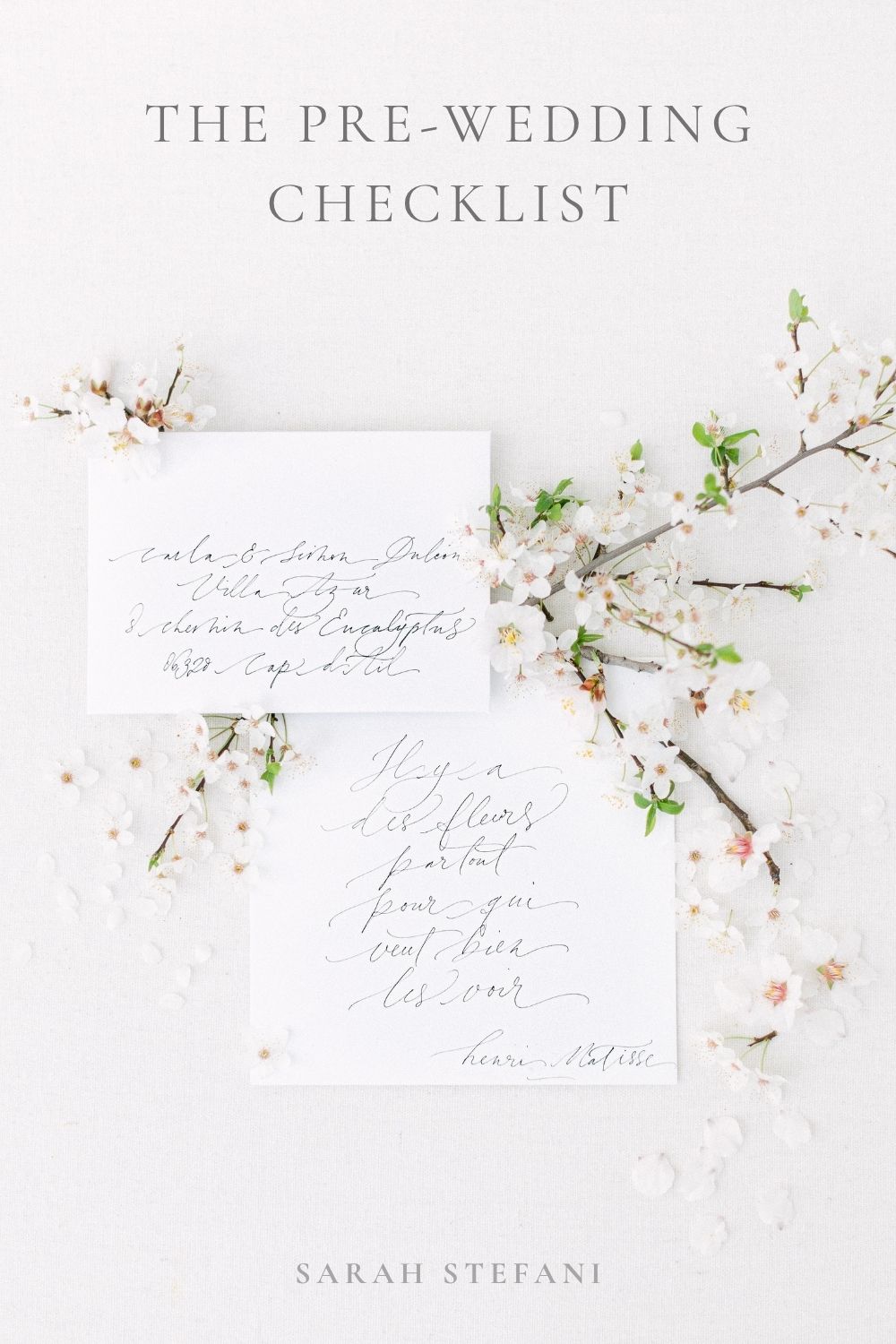
If you want to go further in structuring your client and planner communications, download The Pre-Wedding Checklist for free.
It is an 11-page PDF guide containing every logistical detail to confirm with your couples months before the wedding day, in chronological order: what to ask, when to ask it, and how to handle responses so you are never caught off guard on the wedding morning.