Our Location
304 North Cardinal St.
Dorchester Center, MA 02124
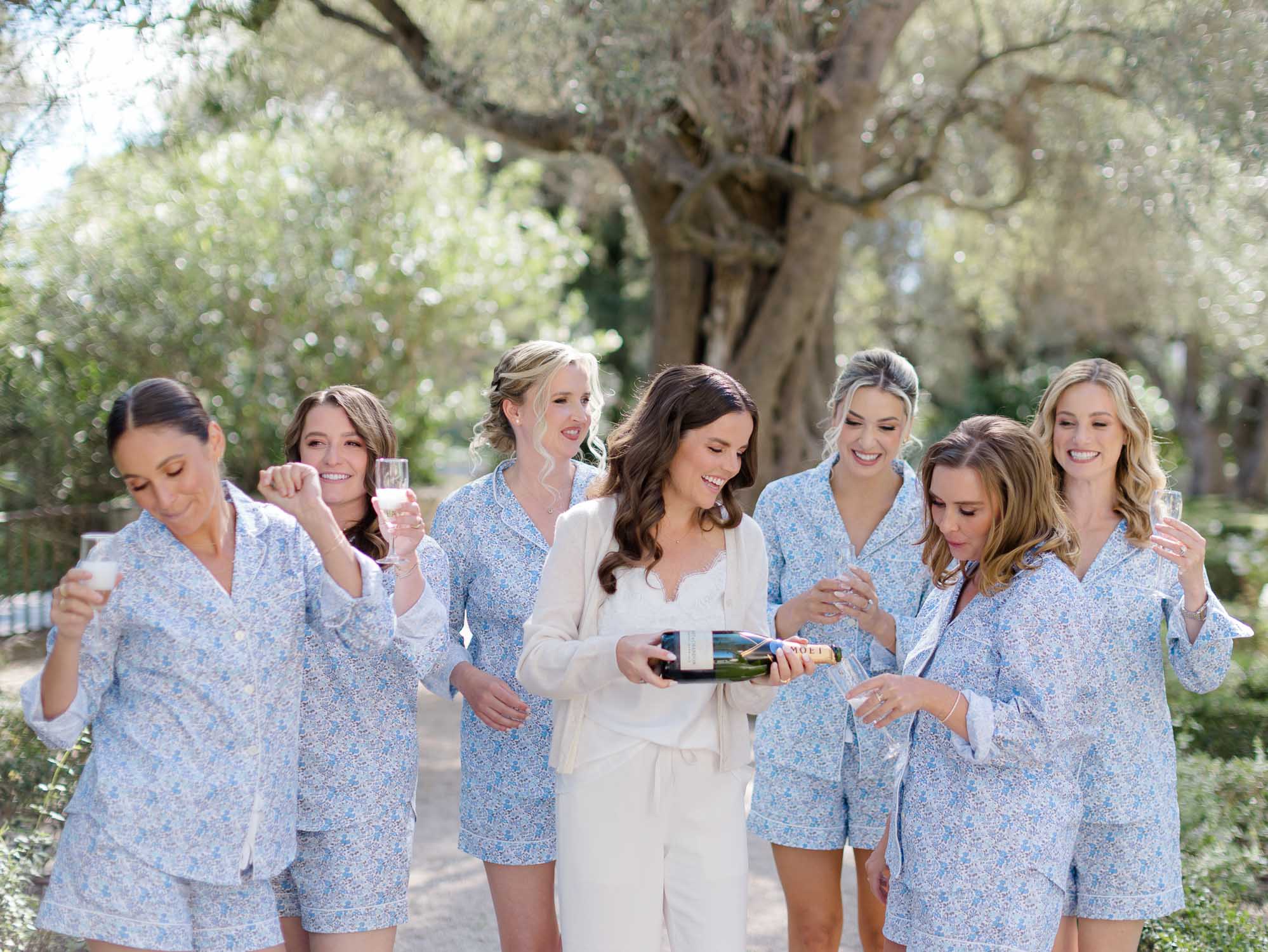
A Canadian couple, a private villa above Saint-Tropez, a bedroom on the first floor at twenty to twelve. The bride had found matching robes for her bridesmaids and she wanted the pictures everyone wants from that moment, the girls together, a glass raised, all of them laughing. We made them, and we made them without her sister, who was the only one not ready. Her hair was half done, her makeup had not been started, and she was not going to appear like that in a set of photographs she would be looking at for the rest of her life. She had her reasons and they were good ones. Nobody made a scene about it. I could see on the bride’s face that it was a shame.
That was one of the first well-off weddings I photographed, early in my career, and I was not equipped for it. Nobody had told me those images mattered, and it had not occurred to me to ask. What I understood standing in that room is that the question of when hair and makeup finish, for everybody and not only for the bride, has to be put to someone months in advance. That morning it had not been put to anyone.
Everything I know about what to ask a couple before their wedding day came out of mornings like that one. The questions themselves are not complicated, and most photographers already have them somewhere in a questionnaire. What took me years to understand is that a question has a shelf life, and that asking the right thing at the wrong moment produces the same result as never asking at all.
Asked eight months before a wedding, a question is a suggestion. The couple have nothing booked beyond the venue, nothing is fixed, and what you ask for gets absorbed into a day that is still being built. Asked six weeks out, the same question is a request. Things now have times attached to them, other vendors have been told, and moving one thing means writing to three people. Asked three days out, it becomes a problem, and you are the person who created it.
So what follows is a calendar rather than a list. It is the one I ended up working with, from the first enquiry through to the morning of the wedding, and what I did with each answer.
One thing to say before the list. I photographed weddings on the French Riviera and in Provence for ten years, from October 2015 to October 2025, and I covered most of them alone. Everything here assumes a wedding held entirely at one venue, with a ceremony, a cocktail hour and a dinner. That is the international model you find in villas, estates and hotels. If your day is split between a town hall, a church and a reception venue two valleys away, the questions still hold, but the timings behind them do not.
There is a principle underneath this whole article, and it took me years to name it. You sell what you show. Nobody ever wrote to me because of my prices, which were published on my site and settled long before any conversation started. They wrote because they had seen a gallery and wanted a day that looked like that one. And what is in that gallery comes from conditions rather than from the camera. A property photographed empty in the morning light. A room with the bag of details already in it. A dining room with nobody in it for fifteen minutes. A couple who are available in the last hour of light instead of halfway through a starter.
Working alone, securing those conditions is most of the job. So the questions below are not there to help you set a price. They are there to tell you whether you are the right photographer for that particular day, and to tell the couple, early, what the images they have just fallen for actually require of them.
They come at the enquiry stage, in the first call or the first exchange of emails, and none of them is about photography.
Is everything happening at one venue, or are there several locations? Ninety minutes of transit removes an entire block from your morning. You can still say yes, you simply need to know what you are agreeing to, and to say plainly which images become difficult once the day is split in two.
What time does the venue open, and do you have access from the morning? The first two hours of a wedding day, the exteriors and the empty property in soft light, exist only if the gate is open at nine. Ask for the name and phone number of whoever comes to unlock it while the couple still have the venue coordinator on the phone about other things.
Is there a wedding planner, and who? A planner changes your entire method. She is usually booked before the photographer, she is the one who builds the running order, and she is the person you will be writing to for the next year.
What time will you be on site on the day? Many couples do not stay at the venue the night before. A morning built around a bag of accessories ready at ten is worth nothing if they arrive at noon, and this is the single most overlooked question in the whole list.
Roughly how long will your ceremony be? They will not know yet, and that is fine. You ask now so that they understand it is a real variable, and so that the answer comes back to you later instead of never.
This is the moment most photographers waste, and it is the one that changed my results more than anything else I did.
As soon as a couple booked me, I sent them a complete schedule for their day, with times on it, presented as a proposal to adjust. What they received was a timeline built backwards from the exact time the sun would set on their date, at their venue, rather than a list of the things I needed from them.
The reasoning took two sentences to explain. Sunset is a fixed point, the couple portraits sit in the last hour of light, and everything else in the day arranges itself backwards from there. The starting point is an astronomical fact, which means the document is very hard to argue with and does not read as a personal preference.
What I sent with it, every time:
If there was a planner, I wrote to her and copied the couple. One document, one thread, no separate version for anybody.
What this produced had very little to do with the schedule itself. A couple who receives a list of requirements sees a vendor making demands. A couple who receives a schedule built around the light of their own wedding sees someone who has already worked on their day, months before anyone asked her to. It changes how every conversation for the following year begins.
This is when the morning gets decided, and the morning is where solo coverage is usually lost.
You ask the couple, and the planner if there is one. Never the hair and makeup team. I never contacted anybody’s artists myself and I would encourage you not to either, because the moment you start building other people’s schedules you have taken on a coordination job you are not paid for and have no overview to do properly.
Your part is the condition. If they want the robe photographs, everyone appearing in them has to be finished when the block starts, hair, makeup and whatever they are wearing for that moment, and that means everyone rather than the bride alone. Somebody then has to work backwards with the hair and makeup team to decide what time they need to start.
Then you hand the decision back, and this is the part that matters. You sell what you show, so your job is to explain what produces the images they came for. Their job is to decide whether they want them enough to organise the morning around them. If they do, they or their planner will speak to the team. If they do not, you will do what you can on the day, and nobody will be surprised by what comes back.
This is also how you protect yourself. The condition was explained, in writing, months in advance, and the choice stayed theirs.
Say one more thing while you are there, because nobody says it to couples. Hair and makeup routinely overrun, sometimes by an hour, and nobody dares tell the bride. The wording that lands attributes the delay to experience rather than to their team: hair and makeup often take longer than planned, your planner may be able to build in some margin there.
This is the most common failure of the entire morning, and it is the one from the villa in Saint-Tropez. Someone who is not ready while the others are will step out of the frame, and she is entitled to. The photographs still happen, with one person missing from them, and the bride notices at the time.
Which room will the bride be getting ready in, and does it have a window with soft light. Will the dress be out of its garment bag and steamed before you arrive. Who is assigned to help her into it. Whether there is somewhere in that room, or just outside it, that can be cleared of luggage and hangers before you start.
Ask for every object gathered in one bag, ready at the time set in your schedule. Rings and bands, jewellery, perfume, shoes, cufflinks, vow books, and any family piece they care about. Ask for the invitation suite in three copies, because you need to show the front, the inside and the back, sometimes in one composition, and you need more than one card to build a frame that is not a flat photograph of a piece of paper.
This request has the best effort-to-benefit ratio of anything in this article. Twenty minutes spent hunting for one earring is twenty minutes nobody gives back to you.
Three things, offered gently, and all of them free for the couple.
Where the officiant will stand, because unless it is agreed in advance they will be in the centre of every photograph of the couple together. Whether the couple will stand rather than sit, and turn side-on to their guests rather than away from them. And how the wedding party will be spaced coming down the aisle, one pair at a time, because pairs that run together give you one good photograph with six half-visible faces stacked up behind it.
Present these by first saying where you will be standing. Couples understand the whole thing immediately once they know you are shooting from the axis of the aisle.
What time the ceremony setup will be finished, and whether anybody is holding the entrance afterwards. This one goes to the planner, who is the only person who knows what each vendor can actually deliver and when. Without a planner, it goes to the couple like everything else. Ceremony décor is photographed as late as possible, which is also what the florist wants because the flowers have to survive until the ceremony. That only works if someone stops the first guests walking in and putting a jacket on a chair.
One month and a half if there is a planner, two months if there is not, because with nobody centralising the vendors you will have to chase.
Here you ask for the consolidated running order and check what survived from your recommendations. Expect it to need work. Some planners are used to photographers who come in pairs and send their schedule assuming you will sort it out between you, and occasionally the person on the other side is simply not very experienced.
What you are checking for:
And the exact golden hour time for their date and their venue, calculated by you, sent to the planner, in writing. Not “around sunset”. A theoretical sunset assumes a clear horizon, and a property with a hill to its west or a row of cypresses loses its light thirty to forty-five minutes earlier, which happens to be the exact length of your couple session.

I kept a version of this same schedule in my head for years, until I finally wrote it down properly, months in advance instead of a week out. The full version, with every question and when to send it, is in the checklist below.
A written list of groups, with first names. Not “family photos”. An explicit list, along the lines of Group 4, Lucy, Matthew, Barbara, Karen, John. Fourteen groups maximum.
One named person calling those names out loud on the day. A bridesmaid, a brother, the planner, the coordinator, the DJ. It does not matter who, as long as they know it is their job before the wedding rather than being handed it at six in the evening.
Ask for both a month ahead, then ask again seven days out. Be the one who asks twice. Without them, twenty minutes becomes ninety, and you lose the cocktail hour candids, the reception décor and the golden hour portraits in a single afternoon.
Couples usually ask how long a group photo takes, because they want to multiply that number by the number of groups they would like. The honest answer disorients them. The photograph took me three seconds. What takes time is that cocktail hour is the first moment guests actually reach the couple, so five people walk up, hug them, congratulate them, exchange a few sentences, and then you take a picture. Multiply that by fourteen.
If the previous conversations happened, there is one question left on the day. Where is the bag of accessories. That is the point of all of it. On the wedding day you should have nothing left to secure, so you can photograph.
The wording matters more than the list, and there is one rule underneath all of it. Never ask for yourself.
“How am I supposed to photograph that?” puts you in the position of someone with a claim, and your claim then competes with every other constraint on the day. What worked, every single time, was to observe, explain, and hand the decision back to the couple. I see you have planned this at this time. That is usually when I photograph that. I do not see that window in the schedule. Is that intentional, because you would rather not have those images, or was it an oversight?
Either answer is useful. They tell you it does not interest them and you know, on the day, that nobody is expecting those photographs. Or they realise they did care without having thought about it, and they reorganise. The second happens more often than you would expect, and it tends to cascade, because once a couple understands the mechanism they start asking what else you can see.
Two more things that help. Add a fact rather than a complaint: I cannot photograph something that does not exist yet, and I cannot be in two places at once. And offer the route with the question, because a question that already contains its own solution gets answered far faster than an open one. Would it be possible to bring that installation forward by half an hour?
If somebody starts counting your hours, and it happened to me once in ten years, drop the clock times and give durations with conditions attached instead. Three hours for the details, with the bag ready at the start of the block. Forty-five minutes for the groom, once he is fully dressed. A time invites arithmetic. A duration with a condition gets discussed on its merits.
When should a wedding photographer send their timeline? As soon as you are booked, while nothing on the couple’s side is fixed yet, then a second time six weeks before the wedding to check the final running order. Two sends, not one.
Who do you send the timeline to, the couple or the planner? The planner, with the couple in copy, always in the same thread. They see you taking things in hand, they learn about any organisational problem at the same time she does, and the decision stays theirs.
What if the couple never send their schedule back? Resend your recommendations without waiting for it, framed as your photography requirements in case they are useful while the running order is being built. At best it triggers the conversation that never happened. At worst you have done your maximum, in writing.
Three things, and the first is the one I lost images to.
I would explain much earlier what the images in my galleries actually cost to produce. A couple books you because of what they have seen, and they assume it comes from the camera. In Saint-Tropez nobody had hidden anything from me, the conditions had simply never been described to anyone, by me or by anybody else.
I would stop burying conditions inside paragraphs. One line, one question, one answer expected. The email that reads beautifully is not the email that gets acted on, and I wrote a lot of beautiful emails in my first five years.
And I would ask the intentional-or-oversight question much earlier than six weeks out. It is the single most effective sentence I found in ten years, and I only started using it properly somewhere around year seven.
None of this shows in the final gallery. It is what makes the gallery possible, and it explains why so many good photographers find solo weddings exhausting. They spend the day fighting conditions that could have been settled three months earlier, and they lose, because at four in the afternoon on a Saturday nothing gets negotiated any more.
Everything above is what I used to figure out, wedding after wedding, mostly on the fly. I eventually wrote it all down: every question, and the exact month to send it. Eleven free pages, built from ten years of doing this alone.